
Take a good look at the picture. What is it you see?
At first glance, it might appear as a maze of undulating lines, a figment of extraterrestrial life, or perhaps it reminds you of a Mandelbrot set – those intricate patterns where you’re invited to perceive an image within the chaos.
Without revealing too much, the artwork is none of the aforementioned. Created by Savannah Root from Lamar, Missouri, this drawing sparked a flurry of internet debates around the same time the “is it blue or gold dress” illusion did.
The craziest thing about this, is once you do see it, you can never un-see it. Once you discern the intended figure, it is as though your brain etches it permanently into memory. The initial confusion dissipates, leaving behind only the clear image, resistant to efforts to revert to the original enigma. This phenomenon underscores the importance of personal discovery – so if you recognize the image, consider preserving the mystery for others to unravel themselves.
Welcome to the Tribe
This visual exercise subtly mirrors societal dynamics. Our communities often form around shared perspectives and experiences. With this image, a distinct line is drawn between those who perceive the image (“seers”) and those who don’t. There are immediate “seers,” there are those who struggle but eventually succeed, and there are those who persist in perplexity. Over the years, I’ve witnessed numerous “holdouts” who, after days or even years, experienced their moment of clarity – a true testament to persistence.
Among those who can’t see, and do take a while, an interesting phenomenon occurs as well. Because we are preordained to accept things that fit into our world view, we fall trap to the confirmation bias, where we start looking for or inventing explanations when we are unable to be “right”. A small subset of those who can’t yet see this, might be highly sensitive to rejection and thus start strongly arguing that there is NOTHING in the picture. With today’s interconnected society it’s a lot easier to find various viewpoints, and so going online they might be able to find other likeminded folks who still can’t see the picture for what it is.
In extreme cases, a subculture of vehement denial may develop, with individuals clinging to their stance against overwhelming evidence. To the point where, even if they do eventually see it, they refuse to admit it because of the emotional investment they made into the contrarian viewpoint. As a case in point: remember autostereograms or the magic eye pictures of the early 90s? Although there are people who are physically unable to see these (blind in one eye, visual processing issues, or just unable to relax their view enough) – there is actually a sub-culture of folks who actively believe that everyone else is making this up?
Acceptance and Understanding
Interestingly, autostereograms can be objectively generated and analyzed with technology, proving their existence and consistency, independent of human perception. Yet, there remains a faction of people who, despite the empirical evidence, refuse to acknowledge the reality of these images. Here is something objectively measurable, yet individuals continue to refuse the data presented to them.
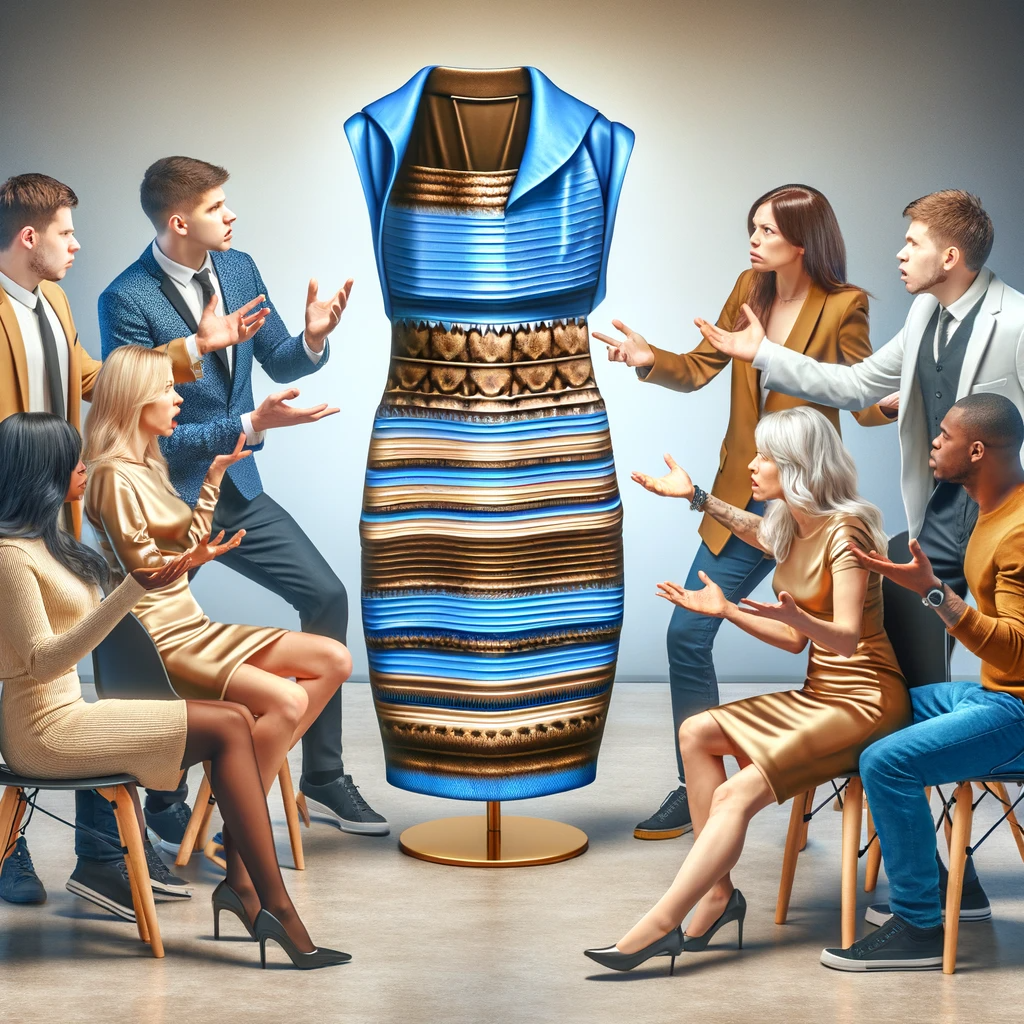
This resistance to accept verifiable evidence on a simple matter raises questions about our collective ability to engage in discussions where facts are more ambiguous. It ultimately boils down to a consensus on how we interpret and react to information, and the implications it has on our lives. To date, I’ve not witnessed aggression from those who can see the “magic eye” images towards those who can’t. This tolerance contrasts starkly with the combative nature some non-perceivers adopt. Remember that blue-gold dress? Not only was the dress a cause domestic violence, it’s credited as the cause in the sharp rise in bar fights at the same time.
In navigating these complex waters of perception and belief, how should we proceed? Your thoughts and experiences are invaluable—share them with us.

// COMMENTS